


Electric Light Commercial Vehicle Market Growth, Drivers and Opportunities 2025 to 2031
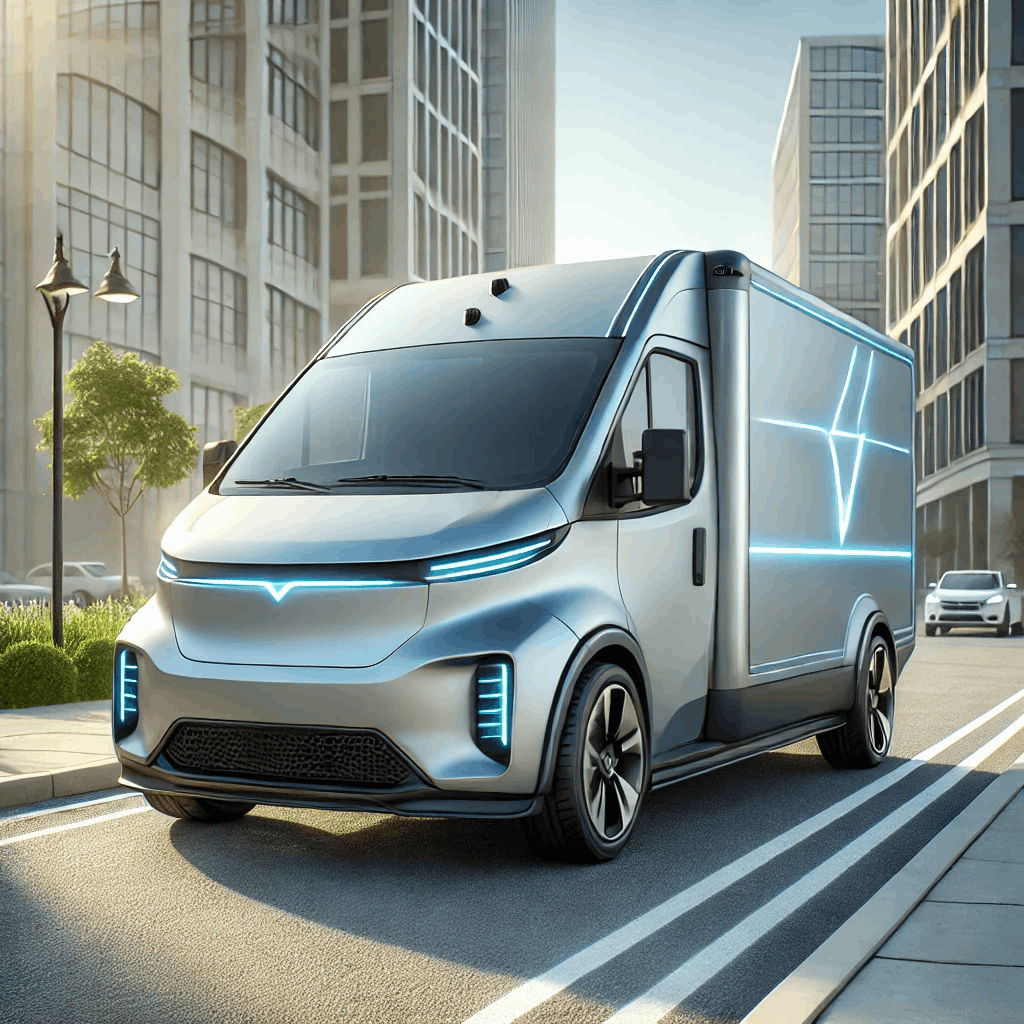
The global Electric Light Commercial Vehicle Market Growth analysis for 2025 to 2031 reveals a market experiencing one of the most dynamic expansion phases across the entire automotive sector. The Insight Partners projects a CAGR of 22.5% from 2025 to 2031, a rate that reflects the simultaneous activation of multiple powerful demand drivers spanning government policy, technology evolution, corporate sustainability mandates, and the explosive growth of urban logistics. The electric light commercial vehicle segment is no longer an emerging niche but a mainstream commercial transportation solution commanding increasing investment and adoption across global markets.
Understanding the specific growth drivers and opportunity dimensions of this market is essential for manufacturers, fleet operators, investors, and policymakers seeking to capitalize on or navigate this transformational market shift through the forecast period.
Request Sample Pages of this Research Study @ https://www.theinsightpartners.com/sample/TIPRE00021517
Key Market Driver 1: Favorable Government Policies and Subsidies
Government policy is the single most immediate and impactful driver of electric light commercial vehicle market growth globally. Across major automotive markets, governments are implementing comprehensive policy frameworks designed to accelerate fleet electrification. These include direct purchase subsidies and grants that reduce upfront vehicle costs, tax exemption schemes for zero-emission commercial vehicles, low-emission zone regulations that restrict diesel vehicle access to urban areas, and mandatory fleet electrification requirements for public sector and logistics contracts. The combined effect of these policy instruments is creating a powerful demand pull that is accelerating the replacement of conventional diesel light commercial vehicles with electric alternatives across industries and geographies.
Key Market Driver 2: Increasing Corporate Sustainability Commitments
Corporate sustainability has evolved from a reputational consideration to a strategic business imperative, and fleet electrification is a central pillar of corporate decarbonization strategies. Major logistics operators, retail chains, courier services, and manufacturing companies with delivery fleets are making public commitments to achieve net-zero emissions by specific target dates, with eLCV adoption as a primary mechanism for reducing Scope 1 emissions. This corporate demand is generating large-scale fleet electrification contracts that represent high-volume, high-value revenue opportunities for electric light commercial vehicle manufacturers. The reputational and regulatory risks associated with maintaining diesel fleets are further accelerating corporate transition timelines.
Key Market Driver 3: Proliferation of Battery Technology Advancements
Battery technology advancement is the foundational enabler of electric light commercial vehicle market growth. Improvements in lithium-ion battery energy density are delivering greater vehicle range per charge, directly addressing the range anxiety concern that has historically limited fleet operator adoption. Simultaneously, declining battery manufacturing costs are translating into lower vehicle purchase prices, improving the total cost of ownership proposition for eLCVs relative to diesel alternatives. Solid-state battery technology, while not yet commercially deployed at scale, represents a significant future performance enhancement that promises higher energy density, faster charging, and improved safety characteristics that will further expand the eLCV addressable market.
Key Market Driver 4: E-Commerce and Last-Mile Delivery Boom
The sustained global growth of e-commerce is creating structural and durable demand for last-mile delivery solutions, with electric light commercial vehicles ideally positioned to serve this need. Urban delivery operations benefit specifically from eLCV characteristics including zero tailpipe emissions that enable access to low-emission zones, lower operational noise that allows deliveries during restricted hours, and reduced fuel and maintenance costs that improve delivery economics. Major logistics operators and e-commerce platforms are actively building dedicated electric delivery fleets, creating consistent high-volume demand for eLCV manufacturers and driving scale economies that further support market expansion.
Key Market Driver 5: Expanding Charging Infrastructure
The rapid scaling of public and private charging infrastructure is removing one of the most significant operational barriers to electric light commercial vehicle adoption. Fleet operators require reliable depot charging solutions for overnight vehicle recharging, and the availability of fast public charging along key logistics routes is critical for extended-range commercial operations. Government infrastructure investment programs and private sector charging network operators are collectively expanding charging availability across major markets, progressively increasing the operational viability of electric LCV fleets across a wider range of commercial applications and geographies.
Market Opportunities
The vehicle-as-a-service model represents a significant emerging business opportunity in the electric light commercial vehicle market. By offering eLCVs through subscription or leasing arrangements, operators can eliminate the upfront capital cost barrier for small and medium-sized businesses, dramatically expanding the addressable market. Additionally, telematics and fleet management technology integration creates opportunities for data-driven operational optimization services that generate recurring revenue streams alongside vehicle sales.
Competitive Landscape
- BYD Auto Co., Ltd.
- Ford Motor Company
- PIAGGIO VEHICLES PRIVATE LIMITED
- Daimler AG
- The Hyundai Motor Company
- Groupe Renault
- Groupe PSA
- Volkswagen AG
- Mahindra Electric Mobility Limited
- Tata Motors Limited
Conclusion
The electric light commercial vehicle market growth trajectory through 2031 is supported by an exceptionally broad and durable set of demand drivers. With a CAGR of 22.5%, this market represents one of the most compelling growth opportunities in the global automotive sector. The full report by The Insight Partners provides detailed growth projections and strategic recommendations.
About The Insight Partners
The Insight Partners is a one-stop industry research provider of actionable solutions. We help our clients in getting solutions to their research requirements through our syndicated and consulting research services. We specialize in industries such as Semiconductor and Electronics, Aerospace and Defense, Automotive and Transportation, Biotechnology, Healthcare IT, Manufacturing and Construction, Medical Devices, Technology, Media and Telecommunications, Chemicals and Materials.
Contact Us
The Insight Partners
Phone: +1-646-491-9876
E-mail: sales@theinsightpartners.com

 English
 Arabic
 French
 Spanish
 Portuguese
 Turkish
 Dutch
Dutch
 Italiano
 Russian
 Romaian
 Portuguese (Brazil)
 Greek
Greek