


HVAC Air Duct Market Dynamics: Drivers, Restraints and Future Outlook
Free
The HVAC Air Duct Market is an integral part of the global heating, ventilation, and air-conditioning industry, enabling the effective distribution of conditioned air across residential, commercial, and industrial buildings. HVAC air ducts serve as pathways that transport cooled or heated air from HVAC systems to different areas within a building, ensuring proper ventilation, thermal comfort, and indoor air quality. As global construction activities expand and building efficiency becomes a priority, the demand for advanced HVAC air duct systems continues to grow.
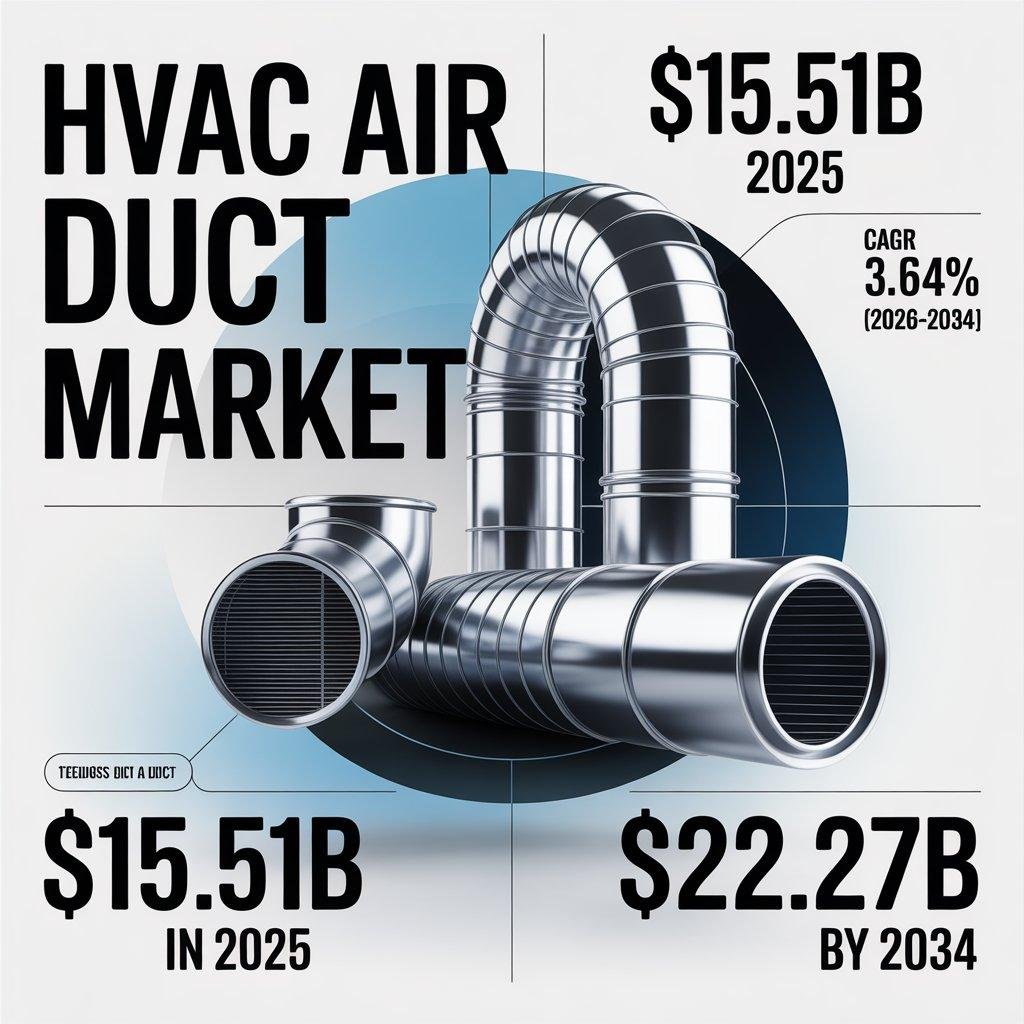
The HVAC air duct market size is expected to reach US$22.27 billion by 2034 from US$15.51 billion in 2025. The market is anticipated to register a CAGR of 3.64% during 2026–2034. Understanding the key market dynamics, including drivers, restraints, and future outlook, is essential for analyzing the growth potential of the HVAC air duct industry. These factors influence how the market evolves, how companies innovate, and how building infrastructure adapts to modern ventilation requirements.
Get a PDF Copy @ https://www.theinsightpartners.com/sample/TIPRE00022929
Market Drivers
One of the primary drivers of the HVAC air duct market is the rapid growth of the global construction sector. Increasing urbanization and population growth are leading to large-scale residential and commercial construction projects worldwide. Buildings such as offices, hospitals, hotels, shopping malls, and educational institutions require efficient HVAC systems to maintain comfortable indoor environments. HVAC air ducts play a vital role in distributing conditioned air throughout these structures, making them an essential component of modern infrastructure.
Another significant growth driver is the increasing focus on energy efficiency. Governments and regulatory bodies are implementing strict building energy standards to reduce energy consumption and carbon emissions. Efficient duct systems with improved insulation and leak-proof designs help reduce energy losses during air distribution, improving the overall efficiency of HVAC systems. As sustainability initiatives continue to expand, energy-efficient duct systems are gaining widespread adoption in new construction projects.
The rising awareness of indoor air quality (IAQ) is also boosting demand for HVAC air duct systems. Poor ventilation can lead to the accumulation of dust, pollutants, and airborne contaminants, which can negatively affect occupant health and productivity. Modern HVAC duct systems are designed to support better airflow management and air filtration, ensuring healthier indoor environments in homes, offices, healthcare facilities, and public buildings.
Technological advancements in HVAC systems are further supporting market growth. Innovations such as smart ventilation systems, IoT-enabled sensors, and automated airflow management technologies are transforming traditional HVAC infrastructure. These smart systems can monitor temperature, humidity, and airflow levels in real time, enabling efficient climate control and improved energy performance.
Market Restraints
Despite the positive growth outlook, the HVAC air duct market faces several restraints that may limit its expansion. One of the major challenges is the high initial installation cost associated with advanced duct systems. High-quality duct materials, insulation technologies, and specialized installation processes can increase overall project costs. This can discourage adoption in small-scale construction projects or cost-sensitive markets.
Another restraint is the volatility of raw material prices. HVAC air ducts are commonly manufactured using materials such as galvanized steel, aluminum, and polymer composites. Fluctuations in the prices of these raw materials can increase manufacturing costs and affect profit margins for industry players. In addition, supply chain disruptions can create uncertainties in the availability of essential materials.
The complexity of duct system design and installation can also pose challenges. Large commercial buildings require extensive duct networks that must be carefully designed to ensure balanced airflow and efficient system performance. Improper installation or poor maintenance can result in air leakage, reduced system efficiency, and increased energy consumption.
Maintenance requirements are another concern for building owners and facility managers. Over time, dust and microbial contaminants can accumulate inside air ducts, which may reduce airflow efficiency and affect indoor air quality if not properly maintained.
Future Opportunities
Despite these challenges, the HVAC air duct market presents several promising opportunities for growth. One major opportunity lies in the development of energy-efficient and sustainable duct systems. Manufacturers are investing in advanced materials and improved duct designs that minimize energy losses and align with global sustainability goals.
The growth of smart buildings and intelligent infrastructure is also creating significant opportunities for the market. Smart buildings rely on automated HVAC systems that integrate sensors, digital monitoring platforms, and advanced airflow control technologies. HVAC air ducts that support these intelligent systems are expected to experience increased demand in the coming years.
Another opportunity is the retrofitting and modernization of existing buildings. Many older buildings around the world are upgrading their HVAC systems to meet modern energy efficiency standards. Replacing outdated duct networks with advanced air duct systems improves system performance and reduces energy consumption, creating new business opportunities for HVAC manufacturers and service providers.
The adoption of prefabricated and modular duct systems is also gaining traction. These systems are manufactured off-site and assembled quickly during construction, reducing installation time and labor costs. Prefabricated ducts offer improved quality control and consistent performance, making them increasingly popular in large infrastructure projects.
Regional Market Outlook
Regionally, the HVAC air duct market is expanding across all major regions, with Asia-Pacific emerging as a key growth center. Rapid urbanization, industrialization, and infrastructure development in countries such as China, India, and Southeast Asian nations are driving strong demand for HVAC systems and related components.
North America and Europe represent mature markets with strong adoption of energy-efficient building technologies and strict regulatory frameworks related to indoor air quality and energy consumption. These regions continue to invest in building renovation projects and smart infrastructure development, which supports the demand for advanced HVAC duct systems.
The Middle East and Africa are also experiencing growing demand due to the development of commercial infrastructure and the need for efficient cooling systems in hot climates.
Future Outlook
The future of the HVAC air duct market appears promising as the global construction industry continues to expand and the demand for efficient ventilation systems increases. Advances in HVAC technology, energy-efficient materials, and smart building solutions will continue to shape the development of the market.
Related Report:
1) Tailgating Detection System Market Size, Share & Forecast to 2034
2) Portable Power Inverter Market Growth, Opportunities & Forecast 2034
3) Organic Light Emitting Diode (OLED) Market Size, Share, Trends, and Forecast to 2034
About Us -
The Insight Partners provides comprehensive syndicated and tailored market research services in the healthcare, technology, and industrial domains. Renowned for delivering strategic intelligence and practical insights, the firm empowers businesses to remain competitive in ever-evolving global markets.
Contact Information –
Email: sales@theinsightpartners.com
Phone: +1-646-491-9876
Also Available in : Korean German Japanese French Chinese Italian Spanish

 English
 Arabic
 French
 Spanish
 Portuguese
 Deutsch
 Turkish
 Dutch
Dutch
 Russian
 Romaian
 Portuguese (Brazil)
 Greek
Greek