


The Growing Significance of AI Detectors in the Modern Digital Landscape
Paid
Family Activity
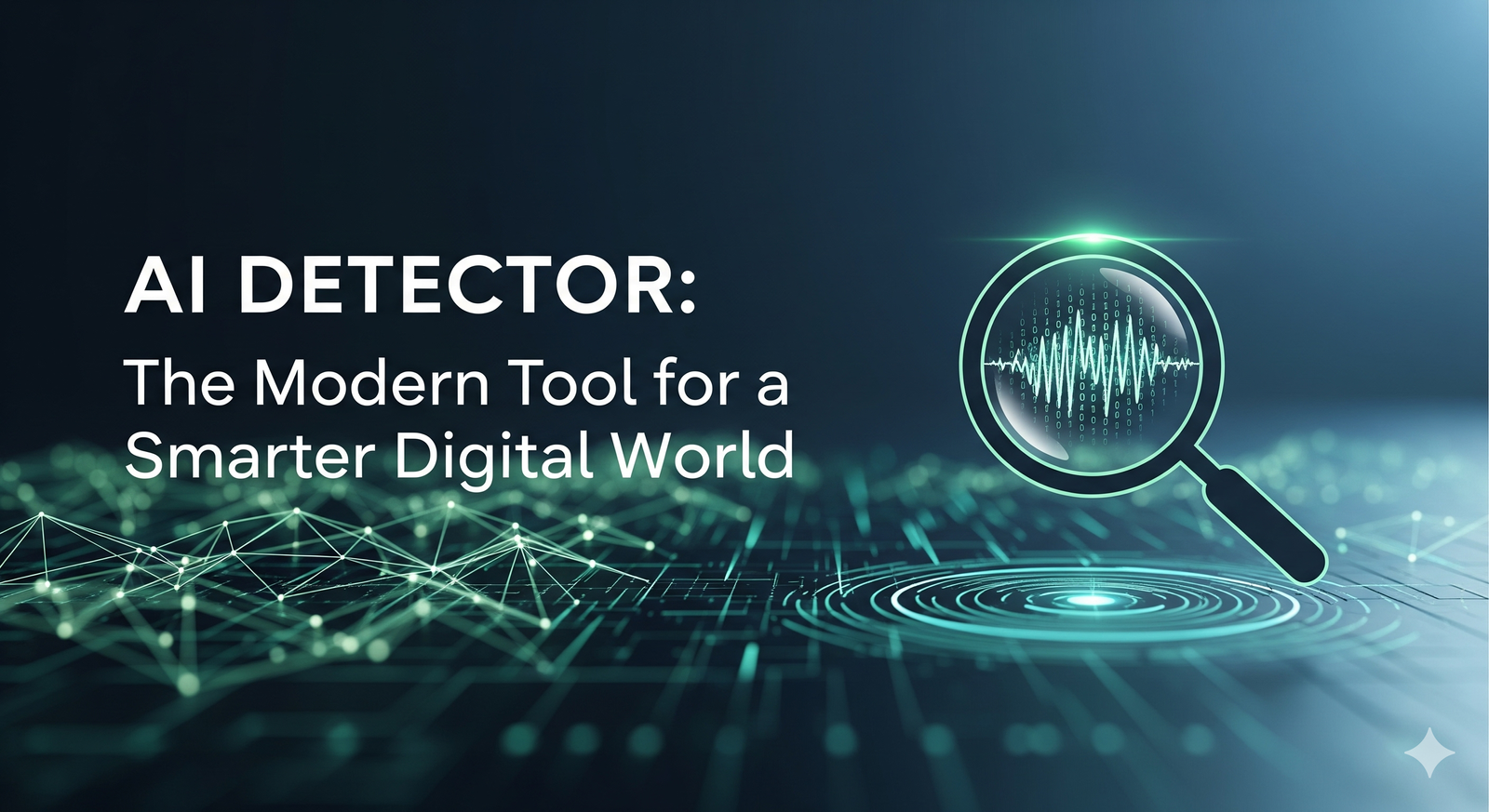
In an age dominated by rapid advancements in artificial intelligence (AI), the digital world is becoming increasingly populated with content created not by humans, but by machines. Whether it's articles, artwork, music, or even videos, AI has made its presence felt across every sector. While this revolution has introduced numerous benefits, it has also created a challenge: how do we differentiate between human and machine-generated content? This is where AI detectors come into play, tools designed to identify and assess content created by AI. As the technology behind AI continues to evolve, AI detectors are becoming essential in maintaining trust, accuracy, and authenticity in the digital realm.
Understanding AI Detectors
An AI detector is a tool or software developed to identify content that has been created by artificial intelligence algorithms rather than human beings. These detectors are trained to recognize patterns, behaviors, and anomalies within text, images, videos, and other forms of media that indicate whether a machine was responsible for the creation. Essentially, they act as digital lie detectors, analyzing characteristics that would typically be invisible to the human eye but are detectable by advanced algorithms.
In the case of written content, for example, AI detectors examine factors like sentence structure, vocabulary choice, repetitiveness, and lack of unpredictability, which are commonly found in machine-generated writing. The ultimate goal is to flag content that may have been produced by AI, ensuring users can discern whether what they’re consuming is authentic or machine-manipulated.
The Need for AI Detectors in Today’s World
The need for AI detectors has become more pressing as AI technology becomes increasingly capable of producing human-like content. Tools like GPT-4 can generate complex, coherent, and realistic articles within seconds. Likewise, image generation models like DALL·E can create breathtaking works of art based solely on text prompts. While these advancements are impressive, they also bring several concerns:
-
Misinformation and Fake News: With AI's ability to generate news articles, blogs, and social media posts that mimic human authorship, it's increasingly difficult to discern whether content is truthful or fabricated. AI-generated fake news can spread faster than ever, leading to widespread misinformation.
-
Plagiarism and Intellectual Property Theft: AI tools that are trained on vast amounts of data can unknowingly replicate portions of existing works. This raises concerns about the infringement of intellectual property rights, with AI systems potentially copying ideas, phrases, or even entire paragraphs from human creators.
-
Ethics and Accountability: AI lacks ethical reasoning or accountability. If harmful content is created by AI, it’s unclear who should be held responsible—the creator of the AI model, the user employing the tool, or the AI itself?
AI detectors are vital in helping address these issues, ensuring that people can trust the authenticity of the information they encounter online and protecting the rights of content creators.
How AI Detectors Operate
AI detectors rely on a combination of machine learning algorithms and deep learning techniques to assess and identify content generated by AI. To understand how these tools work, it’s important to break down the process into a few steps:
-
Training the Model: AI detectors are trained on extensive datasets consisting of both human-generated and AI-generated content. By analyzing these examples, the system learns to detect subtle differences in language patterns, structure, and content characteristics. Over time, the model becomes increasingly proficient at identifying machine-generated content.
-
Pattern Recognition: When AI detectors analyze a piece of content, they examine various elements such as word choice, sentence length, punctuation, and even the overall tone. AI-generated text tends to be more predictable, repetitive, or overly formal. Detectors search for these patterns to make predictions about whether the content is machine-generated.
-
Real-Time Analysis: The power of AI detectors lies in their ability to process content quickly and accurately. As soon as content is uploaded to the system, the detector can scan it and provide a likelihood score indicating whether it was created by AI. This immediate feedback can help users decide whether the content is reliable or if further verification is needed.
-
Detection of Non-Textual Content: For visual and audio content, AI detectors use different techniques. For example, they may analyze pixel distributions in images, audio waveforms in sound files, and lighting effects in videos. These detectors help identify AI-generated visuals that might appear too perfect, overly smooth, or strangely distorted, which is often the case with machine-generated art.
Key Areas Where AI Detectors Are Essential
As AI-generated content continues to proliferate, AI detectors are becoming indispensable in various sectors. Their role is crucial in maintaining authenticity and ensuring that the information consumed by users is genuine and trustworthy. Some key areas where AI detectors are especially important include:
-
Education and Academic Integrity: The rise of AI writing assistants and automated essay generators poses a threat to academic integrity. AI detectors allow educators and institutions to verify the originality of students’ work, preventing cheating and plagiarism. By distinguishing between human-authored and machine-generated essays, AI detectors uphold academic standards and fairness.
-
Journalism and Media: The spread of AI-generated news articles raises concerns about the quality and authenticity of information. Journalists and media organizations are increasingly turning to AI detectors to ensure the news they publish is written by humans and not machines. These detectors help maintain credibility, avoid the spread of fake news, and ensure that journalistic ethics are upheld.
-
Social Media Platforms: Social media is often inundated with fake accounts, bots, and automated posts. AI detectors are used by social networks to identify and block content that comes from automated sources. This helps reduce the spread of spam, propaganda, and malicious content, contributing to a safer and more authentic online space.
-
Marketing and Advertising: AI is commonly used in the marketing industry to generate ads, social media posts, and email campaigns. Marketers can use AI detectors to ensure that the content they produce adheres to brand guidelines and that it is not a direct copy of another source. Additionally, these detectors can help verify the quality of user-generated content that brands might want to use in their campaigns.
-
Legal and Copyright Protection: AI-generated content can sometimes infringe upon copyrights, especially when it replicates human-authored material. Legal professionals use AI detectors to determine whether content has been plagiarized, helping ensure intellectual property rights are respected and protected.
The Challenges Faced by AI Detectors
Despite their growing importance, AI detectors are not without their challenges:
-
Keeping Up with AI Advancements: AI technology is constantly evolving. As AI models become more sophisticated, detectors must be continually updated to identify new methods of generating content. This creates an ongoing arms race between AI developers and detector creators.
-
False Positives and Negatives: AI detectors are not foolproof. In some cases, they may incorrectly flag human-generated content as machine-created (false positive), or they might fail to identify AI-generated content (false negative). This could lead to misjudgments or missed detections.
-
Ethical Dilemmas: There are ethical considerations about how AI detectors are used. For example, overuse of detection tools could raise privacy concerns or lead to unnecessary surveillance. Striking the right balance between detecting AI content and protecting personal freedoms will be a critical challenge going forward.
The Future of AI Detectors
Looking ahead, AI detectors will likely become even more integrated into our digital experiences. As AI technology continues to develop, detectors will evolve to meet the challenges of detecting increasingly sophisticated machine-generated content. With the integration of AI detectors into platforms like social media, word processors, and content management systems, users will be able to instantly verify whether content is human-made or machine-generated.
Moreover, AI detectors may become essential in creating a more ethical and transparent digital ecosystem, helping to regulate the use of AI in content creation and ensuring that automation does not overshadow human creativity and accountability.
Conclusion
The rise of AI has brought about remarkable advancements in content creation, but it also poses challenges to authenticity, trust, and intellectual property. AI detectors are becoming critical tools in navigating this new era, allowing us to differentiate between human-created and machine-generated content. As these tools continue to evolve, they will play a pivotal role in preserving the integrity of digital information, ensuring that we can trust the content we encounter online.


 Arabic
 French
 Spanish
 Portuguese
 Deutsch
 Turkish
 Dutch
Dutch
 Italiano
 Russian
 Romaian
 Portuguese (Brazil)
 Greek
Greek