


PhD Admission Process: A Complete Step-by-Step Guide for 2025
Charging Stations
Pursuing a PhD is a major academic milestone that opens doors to research, university teaching, and specialized professional careers. However, the PhD admission can often feel overwhelming for students due to its multiple stages, eligibility rules, and documentation requirements. This guide simplifies the entire journey—from understanding eligibility to clearing entrance exams and completing interviews—so you can confidently apply for your PhD in 2025.
1. Understanding the PhD Admission Process
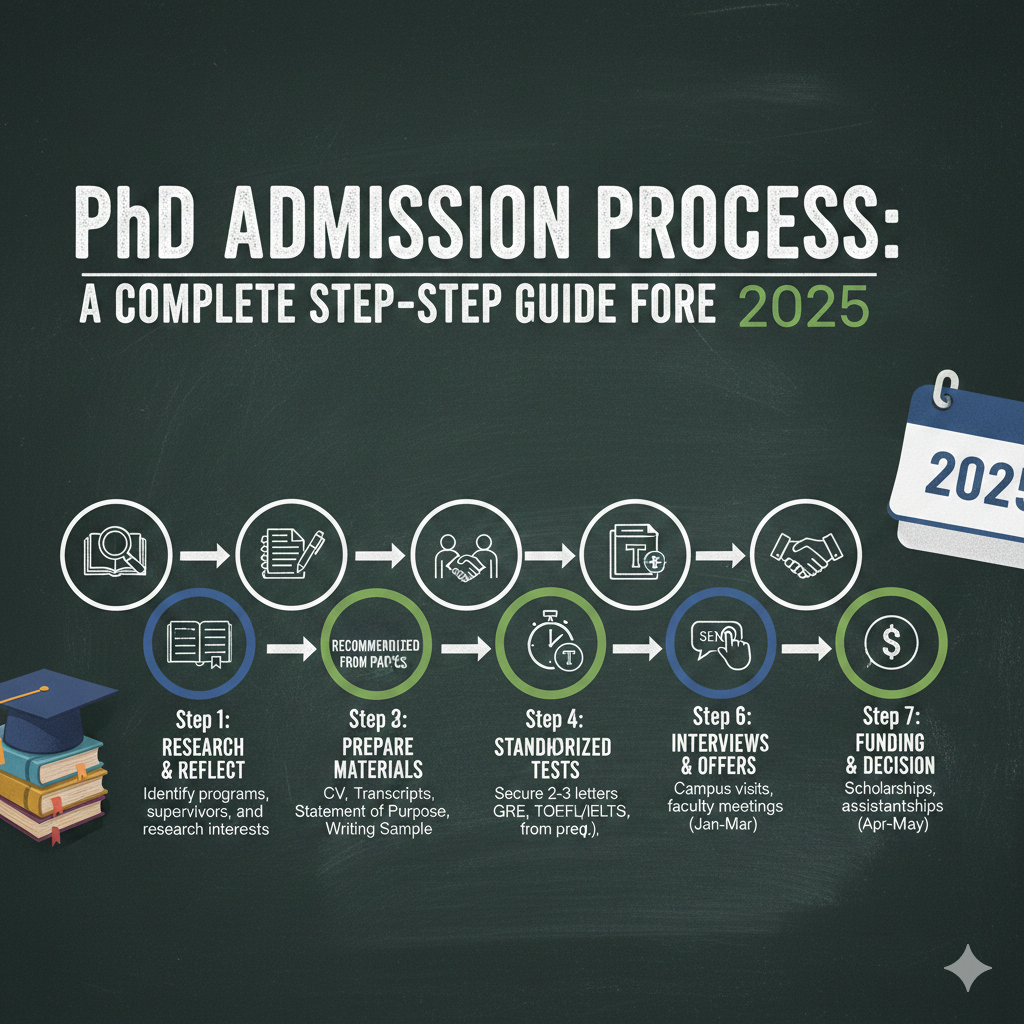
A PhD is the highest academic degree awarded by universities, and the admission process is designed to evaluate a candidate’s academic readiness, research potential, and interest in a specific field. While the structure may slightly vary among institutions, the overall PhD admission process includes:
-
Meeting eligibility requirements
-
Clearing entrance exams or qualifying tests
-
Submitting a research proposal
-
Appearing for interviews (RDP/Viva)
-
Completing document verification
-
Securing final admission and enrollment
2. Eligibility Criteria for PhD Admission
Most universities in India and abroad follow similar eligibility norms. Here are the common requirements:
Educational Qualification
-
A master’s degree (MA/MSc/MCom/MTech/MBA or equivalent) with at least 55% marks.
-
Reserved category candidates may get a 5% relaxation.
-
For STEM fields, some universities require a valid GATE score.
National-Level Eligibilities
Candidates qualifying any of the following exams often get direct entry to interviews:
-
UGC NET / JRF
-
CSIR NET / JRF
-
GATE
-
ICAR AICE-JRF/SRF
-
NBHM (for mathematics)
These exams not only help with admission but also provide monthly fellowships.
3. Entrance Exams for PhD Admission
If you do not have NET/JRF or equivalent qualifications, most universities conduct their own entrance tests. The structure typically includes:
-
Research methodology questions
-
Subject-specific MCQs
-
Analytical and logical reasoning
Some popular university entrance exams include:
-
DUET (Delhi University)
-
JNU Entrance Exam
-
BHU Research Entrance Test
-
IIT/IISc Research Aptitude Tests
The test is usually followed by an interview round.
4. Preparing a Research Proposal
A strong research proposal is one of the key components of the PhD admission process. It tells the department about your research direction and readiness.
Your proposal should include:
-
Title of the research
-
Research problem and background
-
Literature review summary
-
Objectives and research questions
-
Proposed methodology
-
Expected outcomes
Most universities allow minor modifications to the proposal after joining.
5. The Interview / Viva Stage
After clearing the entrance exam, candidates are shortlisted for:
RDC/RAC Interview (Research Degree Committee)
You will be evaluated on:
-
Subject knowledge
-
Understanding of your research area
-
Clarity of the proposal
-
Academic achievements
-
Motivation for doing a PhD
This round is crucial and determines your final selection.
6. Final Selection & Document Verification
Once selected, you must complete the formalities:
Documents Required
-
Master’s degree and mark sheets
-
Bachelor's degree certificate
-
ID proof (Aadhaar/PAN)
-
Migration certificate
-
Passport-size photographs
-
Category certificate (if applicable)
-
Entrance exam scorecard (if any)
After successful verification, you receive your PhD admission offer letter.
7. Enrolling and Starting Your PhD
The last steps include:
-
Paying the admission fee
-
Meeting your assigned supervisor
-
Registering for coursework
-
Attending orientation sessions
Most PhD programs begin with one semester of coursework, after which students appear for the Coursework Exam and then begin full-time research.
8. Tips to Successfully Navigate the PhD Admission Process
-
Start preparing at least 6–8 months in advance.
-
Shortlist universities based on faculty specialization.
-
Reach out to potential supervisors early.
-
Keep your documents ready.
-
Write a clear, focused research proposal.
-
Practice for interviews by discussing your topic with mentors.
Conclusion
The PhD admission process may seem lengthy, but it is designed to ensure that only serious and capable candidates enter research. With the right preparation, proper documentation, and strong academic clarity, you can successfully secure admission to your chosen university in 2025.

 English
 Arabic
 French
 Spanish
 Portuguese
 Deutsch
 Turkish
 Dutch
Dutch
 Russian
 Romaian
 Portuguese (Brazil)
 Greek
Greek